
Technical Sourcing
How to Specify a Zipper for Apparel: A Buyer Guide
A zipper specification is more than a chain type or color name. On apparel, the zipper sits beside curved seams, lining and moving parts, and the user may operate it while wearing the garment. A useful inquiry describes the opening, installation, use conditions and acceptance criteria so a supplier can review options and identify what still needs a trial.
Map the opening before selecting the zipper
Show where the zipper sits and how long the opening must be. Mark insertion direction, top and bottom ends, seam allowance, neighboring panels and any curve. A side view or photo with a ruler can reveal space constraints that a product image hides. State whether the opening is decorative, functional or both.
Apparel construction varies across boots, sneakers, work garments and protective apparel. Component choice depends on pattern, substrate, lining and closure design. Compare a proposed zipper on representative material before confirming fit; do not select solely from an online image or a generic size label.
Specify chain and dimensions clearly
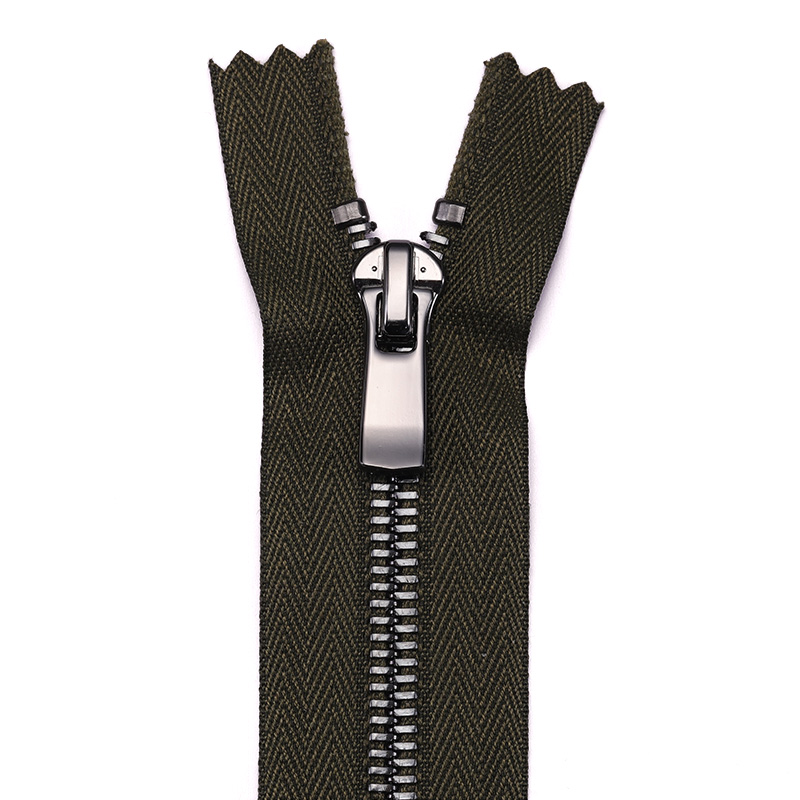
Identify the zipper family and size using the supplier’s terminology, then confirm actual dimensions and construction on the quotation or sample. Coil, molded plastic and metal options may be considered where available, but the suitable choice depends on flexibility, appearance, intended use and compatibility with the garment design.
If there is a standard or reference component, send it with measurement points. Note chain size, tape width, total length, usable opening length and closed- or open-end construction. Ask the supplier to explain any convention that is unclear; nominal size may not communicate every dimension needed for pattern development.
Treat tape and attachment as part of the design
Specify tape color, width, thickness if critical, material preference and attachment method. Identify whether tape is visible, folded, covered or next to a seam. A color that matches a digital swatch may still contrast beside leather, textile or coated fabric once installed.
Check seam allowance, needle path, backing and reinforcement with the apparel factory. A sample mounted on the intended material stack can expose puckering, bulk or a stiff edge. If the zipper follows a curve, the pattern radius matters. Agree whether a straight sample is enough or an installed trial is required.
Select a slider and puller for the user
Record slider shape, puller design, lock function, orientation and branding. The puller should be accessible in the garment’s position but should not catch on laces, fabric or nearby components. For gloves or limited dexterity, the team may need to evaluate a larger or differently shaped puller.
Ask how the slider will be evaluated under expected use. Do not assume appearance proves performance or lifetime. If a functional requirement matters, define test method, conditions and acceptance limit before quotation. Agree how a result will be documented and whether the sample uses production-representative material.
Define ends and safety details
State end construction: top stops, bottom stops, box and pin, closed end or another arrangement. Explain how each end is captured by the pattern and whether it is exposed to the wearer. For children’s or protective products, review product-level safety requirements with the responsible compliance team.
Check that edges are finished and assembly does not create a snag or discomfort point. Consider the zipper with surrounding materials and pattern. If the garment will face moisture, dirt, abrasion or temperature changes, share those conditions so buyer and supplier can agree which evaluation is relevant.
Color and branding require separate references
Identify the target for tape, chain, slider and puller separately. A Pantone reference may not translate identically across dyed textile, coated metal and molded polymer. Provide a physical master when needed and say which parts must visually coordinate. Record the approved sample and revision.
For branded pullers, supply vector artwork, finished dimensions, orientation and relief or print requirements. Clarify ownership and permitted use of logos, especially licensed marks. Confirm the proposed branding process and inspect scale and legibility on a production-representative sample before release.
Set quality checks around the intended use
A buyer may need to assess slider movement, chain engagement, end attachment, dimensions, color or corrosion depending on the application. Name test method, conditioning, sample size and acceptance criteria. Broad wording like “strong zipper” cannot be inspected consistently without a defined method.
If a market requires third-party evidence, identify the exact rule or test and ask whether the requested component is in scope. Confirm report age, sample identity, laboratory and limitations. A report for a different item or finish does not automatically apply to the zipper being purchased.
Prepare a complete zipper RFQ
Attach a garment view, zipper location, opening length, end type, chain choice, tape color/material, slider direction, branding, quantities, color split and target market. Add use conditions, packaging instructions, test requirements and sample stage. State when the sample is needed for review and the intended production launch.
Ask for a written specification and a list of assumptions or questions. Compare quotes against the same line items so offers represent equivalent construction. Then record the approved sample ID, revision and key dimensions before bulk release. A concise but complete RFQ makes open issues visible early.
Discuss an apparel trim project
Attach a drawing or reference image, identify application, quantity and destination, and list required tests or documents. Product availability and terms are confirmed against the specific brief.
Send a project inquiry →